Acquiring new customers remains one of the biggest challenges for startups and growing businesses. Many…
Feedcover: The Nigeria and Africa Opportunity for a Structured, Action-Driven Digital Platform
Over the past decade, digital platforms have perfected one thing: distribution. They have mastered reach, virality, and algorithmic amplification. What they have not mastered, particularly in Nigeria and across Africa, is structure.
Most mainstream platforms are built around infinite feeds. Content flows continuously, shaped by engagement metrics rather than clarity or completion. For creators, this creates confusion. Should they chase trends? Optimize for controversy? Produce short-form videos? Write long threads? The incentives rarely reward depth, local nuance, or sustained expertise.
For consumers, the problem is different but equally frustrating. Discovery is chaotic. Following a topic often means following a person, not a subject. Finding practical information requires navigating hashtags, scrolling through unrelated posts, or relying on fragmented search results.
The result is a paradox: more content than ever, yet less organized knowledge.
In markets like Nigeria, where daily decisions carry financial and social consequences, this lack of structure is not a minor inconvenience. It is a structural gap.
Table of Contents
Nigeria’s Digital Scale Meets Decision Pressure
Nigeria is one of Africa’s largest digital markets. With an estimated population of around 235 million and over 100 million internet users, the country combines scale with youth. The median age is approximately 18, and mobile phones remain the primary gateway to the internet.
Mobile connections exceed 150 million. Social media usage continues to grow. Digital payments are expanding steadily, supported by fintech innovation and regulatory evolution.
Yet digital growth alone does not guarantee clarity.
Nigerians use the internet to solve real problems:
- Finding affordable housing in specific neighborhoods
- Understanding the process of registering a business with CAC
- Comparing private school fees within budget constraints
- Evaluating solar solutions in response to unstable electricity supply
- Searching for remote jobs or migration pathways
- Identifying reliable logistics providers
These are not entertainment-driven queries. They are high-intent decision moments tied to money, risk, and long-term outcomes.
When platforms are optimized for engagement rather than action, these needs are underserved.
The African Context: Expanding Connectivity, Persistent Gaps
Across Africa, connectivity is expanding, but unevenly. Hundreds of millions access the internet via mobile devices, while a significant portion of the population is still coming online for the first time.
This creates a unique dynamic. New users enter the digital ecosystem seeking practical guidance: how to start a business, how to access government services, how to migrate, how to navigate healthcare systems.
At the same time, small and medium enterprises dominate many African economies. Informal markets remain strong. Regulatory environments differ significantly across borders. Infrastructure constraints shape daily life.
In such environments, localized knowledge matters. Global answers often fail to address local realities around pricing, documentation, cultural norms, and institutional processes.
The opportunity lies in structured, hyper-localized guidance that reduces friction between intent and action.
Why Existing Platforms Fall Short
The structural weaknesses of current digital systems can be grouped into four core issues.
1. Algorithmic Prioritization Over Expertise
Creators are incentivized to produce content that generates reactions, not necessarily accuracy or depth. As a result, valuable local knowledge competes with viral trends and sensational commentary.
2. Person-Centric Discovery
Users often follow individuals instead of topics. This limits exploration and makes it difficult to build knowledge across categories. A user interested in housing in Ibadan or solar installation in Abuja should not have to rely on a single influencer to access information.
3. Fragmented Information Journeys
A typical decision journey might begin on social media, continue through search engines, move to WhatsApp groups, and end in direct messages. Each step introduces noise, misinformation, or incomplete context.
4. Weak Trust Infrastructure
Scams, fake reviews, hidden charges, and outdated directories erode confidence. Without visible trust signals, users hesitate to act.
Together, these gaps create an environment where content exists, but structure does not.
The Case for Structured, Action-Driven Platforms
In markets where economic pressure is high, structure becomes competitive advantage.
When a user searches for “100 capacity event venue in Ikeja,” they are not seeking inspiration. They want:
- Capacity specifications
- Clear pricing ranges
- Power supply details
- Parking and accessibility information
- Contact pathways
- When a business owner looks up CAC registration steps, they need:
- Required documents
- Current fees
- Processing timelines
- Common mistakes to avoid
The value of a digital platform increasingly depends on its ability to move users from curiosity to clarity and from clarity to action.
This is where Feedcover positions itself.
What Feedcover Is Building
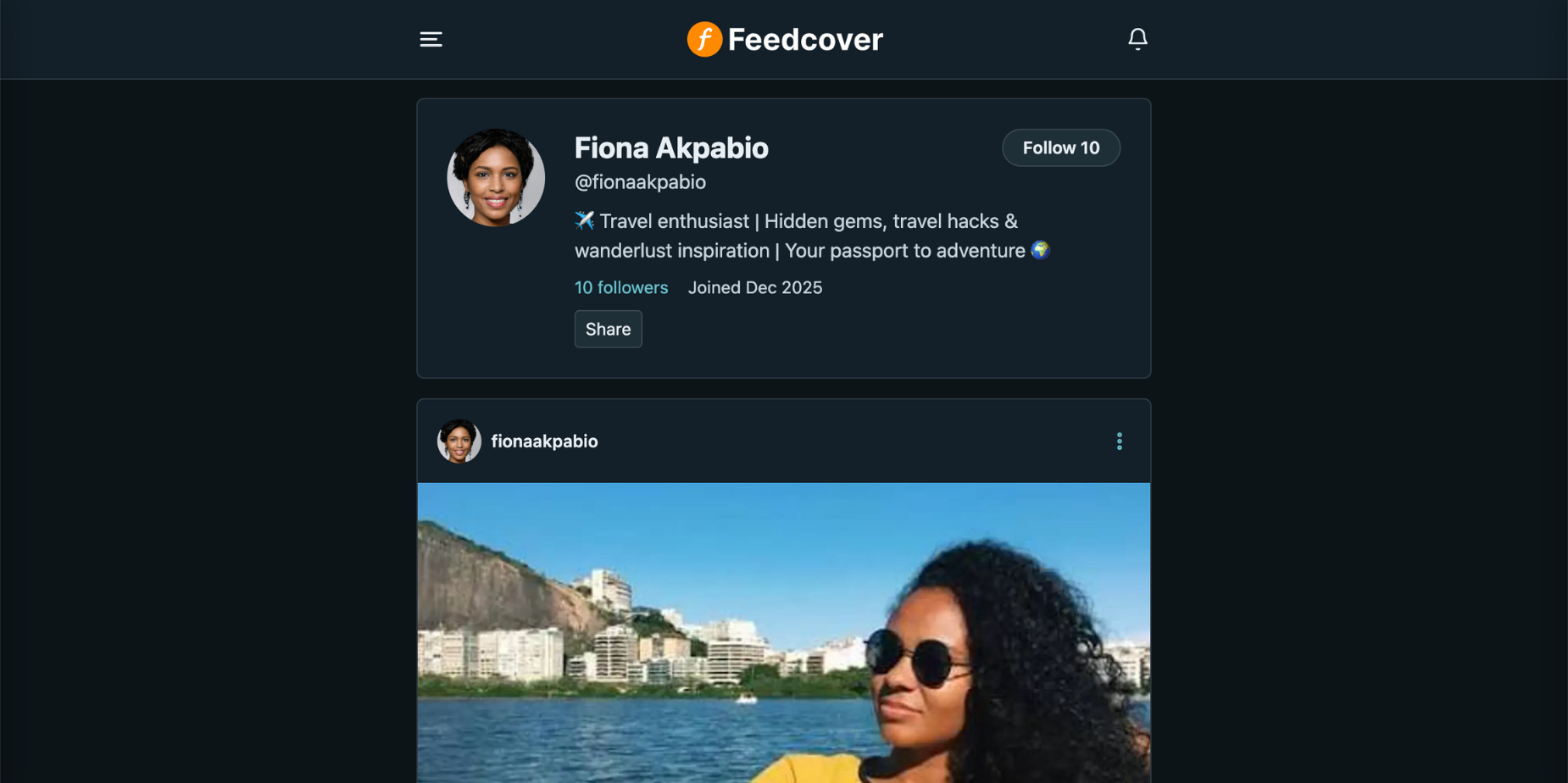
Feedcover is Nigeria’s first hyper-localized content platform—a place where everyday Nigerians can share their lived experiences and connect with others who live in their reality. This makes Feedcover not to be simply a publishing tool. But a platform structured around context.
Hyper-localization means that content reflects real conditions on the ground: local pricing, neighborhood dynamics, regulatory processes, cultural nuance, and lived experience. Instead of generic advice, users encounter grounded narratives and practical breakdowns tied to specific places and situations.
Structure is embedded into the platform’s architecture. Categories, tags, and location filters organize knowledge in ways that allow users to follow topics rather than personalities. This transforms discovery from passive scrolling into intentional navigation.
Action pathways are integrated directly into content. Guides do not end with information; they point to next steps. Experiences do not remain isolated stories; they become reference points for decision-making.
In this model, content functions as infrastructure.
Also Read: How Feedcover Can Help B2B Brands Rethink the Attention Economy in 2026
From Content to Decision Infrastructure
Feedcover’s positioning can be understood through three interconnected layers.
Knowledge Layer
Real stories, practical guides, cost breakdowns, and experience-driven insights form the foundation. Contributors share lived realities, not abstract commentary.
Navigation Layer
Structured categories, topic clusters, and location filters enable users to explore by problem and context. Instead of endless feeds, users access organized clusters of intent.
Action Layer
Content connects to tangible outcomes. Whether through contact pathways, shortlists, templates, or verified listings, the platform reduces friction between understanding and execution.
This integrated approach addresses both creator and consumer challenges. Creators gain clarity about what to focus on: structured, practical contributions within defined categories. Consumers gain clarity about how to discover and act on relevant information.
Why Nigeria Is the Strategic Starting Point
Nigeria offers a combination of scale, urgency, and digital maturity.
The country’s youth demographic drives high content consumption. Economic pressure fuels daily decision-making. Fintech adoption has increased user comfort with digital transactions. SMEs form a significant part of the economy, creating demand for practical business guidance.
A structured, action-driven platform aligns with these conditions. By solving local decision friction, Feedcover builds habitual relevance.
Once validated at scale in Nigeria, similar patterns across African markets create expansion pathways. Infrastructure constraints, SME dominance, and regulatory complexity repeat across borders.
Nigeria provides density. Africa provides repeatability.
The Competitive White Space
Search engines provide breadth but not always context. Social media provides reach but not structure. Forums provide discussion but not integrated action pathways.
Few platforms combine:
- Hyper-localized lived experience
- Structured topic discovery
- Visible trust signals
- Clear action-oriented design
This integration defines Feedcover’s competitive white space.
As digital ecosystems mature, users increasingly differentiate between entertainment platforms and utility platforms. In high-uncertainty markets, utility platforms gain resilience.
A Platform Built for Reality
Nigeria and Africa’s digital future will not be defined solely by content volume. It will be defined by platforms that reduce friction in everyday decisions.
Structured, action-driven design is not merely a product feature. It is a response to economic and social reality.
Feedcover’s opportunity lies in transforming scattered attention into organized knowledge and organized knowledge into confident action.
In markets where every decision carries weight, structure is not optional. It is foundational.

Related Posts