Acquiring new customers remains one of the biggest challenges for startups and growing businesses. Many…
Growth Marketing Tools And Marketing Automation Platforms For Businesses in 2026
Discover the top marketing automation and growth marketing tools for 2026. Learn how Yournotify, and other marketing platforms can boost leads, and retention.
In 2026, businesses — whether small startups or scaling enterprises — simply can’t afford to run marketing the way we did a decade ago. The speed of consumer behavior, competition, and digital channels demand automation and smart growth strategies. That’s where growth marketing and marketing automation tools become indispensable.
Consider some powerful numbers: in 2026, about 75% of companies worldwide reported using marketing automation tools. Companies using automation have seen up to a 451% increase in qualified leads. Many organizations report positive ROI within the first year of adoption — roughly $5.44 returned for every $1 spent over several years.
Beyond revenue and leads, automation reduces manual effort and overhead. Some firms note marketing cost reductions, better segmentation, personalization at scale, and the ability to run multi-channel campaigns without ballooning their workload.
Put plainly: in 2026, marketing automation isn’t a “nice-to-have” — it’s a strategic necessity. For businesses aiming to grow, scale, and stay competitive, automation and growth marketing tools are no longer optional.
Table of Contents
What Is Marketing Automation & Growth Marketing?
Before diving into specific tools, it helps to define what we’re talking about.
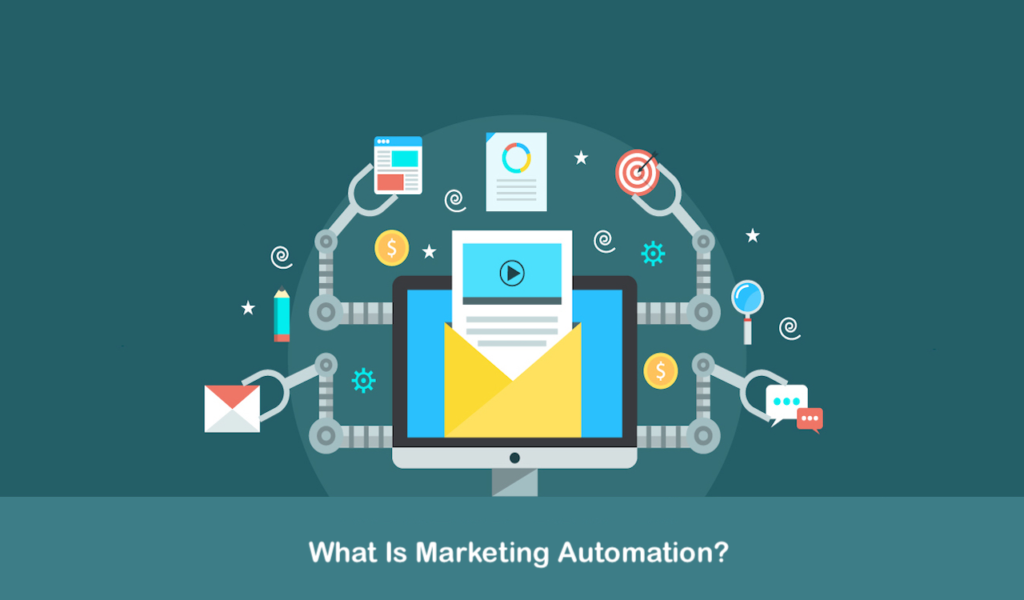
Marketing automation refers to software and platforms that automate repetitive marketing tasks — email campaigns, SMS or WhatsApp messaging, segmentation, lead nurturing, customer follow-ups, analytics, etc. Instead of manually sending every email or message or chasing each lead, businesses can set up workflows or “journeys” that trigger automatically based on user behavior, timing, or other conditions.
Growth marketing, on the other hand, is the mindset or approach that uses data, experimentation, and continuous optimization to grow a business sustainably. It goes beyond “just send the next newsletter” — it’s about acquisition, activation, retention, monetization, and referral loops. It’s about hooking into analytics, user behavior, and lifetime value, then using marketing and automation tools to fuel that growth.
When marketing automation and growth marketing combine, you get the power to reach large audiences efficiently, while still keeping campaigns personalized, data-driven, and optimized.
Growth Marketing Tools vs. Marketing Automation Tools — Clarifying the Difference
You might wonder: aren’t “growth marketing tools” and “marketing automation tools” the same? There is overlap — but also distinctions.
| Growth Marketing Tools | Marketing Automation Tools |
| Focused on overall growth strategy: acquisition, retention, AB testing, analytics, user behavior tracking, lifecycle optimization, growth loops (referrals, retention campaigns) | Focused on executing marketing tasks at scale: email/SMS/WhatsApp campaigns, lead nurturing, segmentation, workflows, transactional messages, multi-channel marketing |
| Often includes analytics, experimentation frameworks, conversion-rate optimization, testing, personalization based on user behavior, cross-channel orchestration | Often includes campaign scheduling, drip sequences, automation rules, contact management, basic analytics for performance, deliverability tools, CRM integration |
| Helps answer “Where should we grow?” and “How do we optimize growth over time?” | Helps answer “How can we run our marketing at scale with minimal manual effort?” |
That said, many modern platforms — especially enterprise-grade ones — straddle both categories: they offer growth marketing features (analytics, A/B testing, personalization, segmentation) and full automation capabilities. Which is why in 2026, businesses often look for hybrid solutions: tools that can run automated workflows and help them optimize growth intelligently over time.
Problems That Growth & Automation Marketing Solve
So what issues does using growth marketing and automation actually solve?
Lead generation & acquisition at scale: Automation makes it easier to capture leads via forms, landing pages, referrals, and instantly start nurturing them. Instead of manually following up, you let the system do it.
Save time and reduce repetitive workload: Marketers no longer need to manually send emails, SMS, WhatsApp messages, or chase follow-ups. Automation saves hours, freeing teams to think strategically.
Lead nurturing & conversion optimization: Automated workflows can guide leads through the funnel with timely messages, welcome flows, follow ups, re-engagement, cart-abandonment messages, etc. This ensures fewer leads fall through the cracks and more convert.
Personalized & segmented communication: Automation allows dynamic messaging based on user behavior, preferences, demographics, or engagement history. Personalization at scale improves conversion and customer experience.
Multi-channel marketing & consistent messaging: Email, SMS, WhatsApp, push notifications — all coordinated from one platform helps maintain consistent branding and communication across channels.
Analytics, measurement, and data-driven decisions: Automation tools often include tracking dashboards, behavior analytics, A/B testing, segmentation reports — critical for growth marketing. Data lets teams see what works, iterate, and improve.
Scale & consistency: As businesses grow (contacts, customers, leads), manual marketing becomes untenable. Automation ensures consistency, reliability, and scalability without exploding costs.
In short: growth + automation solve scalability, efficiency, effectiveness, and growth-oriented problems.
Also Read: All You Need to Know About WhatsApp Marketing
Why Businesses Should Integrate Growth Marketing and Automation Tools in 2026
Here are key reasons why 2026 is a watershed moment for integrating growth marketing + automation:
-
Massive ROI & cost-efficiency:
As covered above, businesses investing in automation often see high returns on marketing spend (e.g., ~$5.44 back per dollar over time) . That’s hard to ignore when budgets are tight and returns must be measurable.
-
Time savings for leaner teams:
Automating repetitive workflows frees up time for strategic thinking, creativity, and high-impact tasks. That’s especially valuable for small/medium businesses or startups where resources are limited.
-
Scalability as the business grows:
As contact lists, customer bases, and marketing channels expand, manual processes become unsustainable. Automation ensures growth without linear increases in work.
-
Personalization at scale:
In 2026’s competitive environment, customers expect personalized experiences. Automation + growth tools give businesses the ability to deliver that — at scale.
-
Cross-channel consistency and sophistication:
Modern customers engage across multiple channels (email, SMS, WhatsApp, push, in-app). Integrated tools let you manage all these from one place, ensuring consistent, coherent communication.
-
Data-driven growth culture & optimization mindset:
Growth is not a one-time push. With analytics, testing, and automation, businesses adopt a “test-learn-optimize” loop — critical for long-term competitiveness.
-
Level playing field between small and large players:
Automation lowers the barrier to scale. Small businesses or local brands (e.g. businesses in Lagos or Nigeria) can compete with international players, as they no longer need large teams to run effective marketing.
Given all that, 2026 is not just an “upgrade” year — for many businesses, integrating growth + automation is a strategic imperative.
Top Marketing & Growth Automation Tools for 2026
Now, below are growth marketing and automation platforms you can use to grow and scale your business in 2026.
Yournotify
Core functionalities
- Customer acquisition: lead capture forms, referral programs, and incentive-powered forms to capture and verify leads.
- Multi-channel engagement: send automated messages via email, SMS, WhatsApp, push, in-app — all from one flow.
- Customer retention: loyalty and reward systems (e.g. airtime, vouchers, rewards tiers), win-back campaigns — useful for repeat customers and retention strategies.
- Developer integrations: REST API, SMTP or SMPP — enables sending messages programmatically, integrating with existing systems or CRM.
Advantages
- All-in-one: Email, SMS, WhatsApp, push and in-app messaging from a single platform — convenient for businesses that want one dashboard instead of multiple tools.
- Affordable and accessible: One of its value propositions is that it is more affordable than ‘traditional mail marketing providers’, especially for regions where foreign providers might have restrictions or higher costs.
- Flexible integration: With API and SMTP/SMPP support, it’s suitable for developers or businesses with custom workflows, which increases flexibility for growth/automation campaigns.
- Good for emerging markets: Because of cost, multi-channel reach (including SMS and WhatsApp), it can be particularly useful for businesses in markets like Nigeria or other low- or middle-income countries.
Pricing
Yournotify operates on a pay-as-you-go model that combines subscription and credit-based billing. While businesses can fund any amount into their wallet, the platform charges a subscription fee of ₦20,000 for the Starter plan, ₦100,000 for the Growth plan, and a custom price for the Enterprise plan.
The Starter plan supports up to 100,000 contacts. The Growth plan covers 100,001 to 500,000 contacts. The Enterprise (Custom) plan is designed for businesses with over 500,000 contacts.
Verdict
Yournotify stands out for businesses — especially SMEs or businesses based in emerging markets — that want a cost-effective, multi-channel marketing and engagement platform, without paying enterprise-level prices. Its flexibility and multi-channel support (SMS, WhatsApp, email) make it a strong candidate for markets where SMS/WhatsApp remain effective.
ActiveCampaign
Core functionalities
Email marketing and marketing automation: multi-step automations, drip campaigns, triggers, autoresponders, conditional workflows.
Contact & list management with CRM features: useful when you start handling many leads/contacts.
Advanced segmentation, dynamic content, site tracking, integrations with many other tools, and (on higher tiers) machine-learning-powered features like predictive sending.
SMS and WhatsApp messaging (as add-ons), in addition to email — for businesses that want multi-channel reach.
Advantages
Great flexibility: from small businesses to enterprises, ActiveCampaign scales. With tiered plans, you pay for what you need.
Rich feature set: automation workflows, segmentation, dynamic content, CRM, integrations, multi-channel outreach — a solid all-in-one solution for many growth + automation needs.
Accessibility: Entry-level plans are relatively affordable (see below), making it accessible for small or mid-sized businesses.
Widely adopted: Good reputation, many reviews, and a broad user base — which often means good community support, documentation, and third-party integrations.
Disadvantages
Pricing increases with contacts: As your contact list grows, costs can rise steeply — which can be a challenge for fast-growing businesses.
SMS and WhatsApp require add-ons: To access non-email channels, additional cost/credits apply.
Pricing
Enterprice Plan: For a contact data of 1,000, ActiveCampaign charges $145 per month.
Pro: For a contact data of 1,000, ActiveCampaign charges $79 per month.
Plus: For a contact data of 1,000, ActiveCampaign charges $49 per month.
Starter: For a contact data of 1,000, ActiveCampaign charges $15 per month.
Pricing depends heavily on contact count, so as you scale, expect costs to increase accordingly.
Verdict
ActiveCampaign is one of the most balanced, widely-used marketing automation platforms. It’s especially ideal for small to medium businesses that want a robust tool to manage email and multi-channel automation, segment lists, nurture leads — without immediately going enterprise scale. As you grow, you can scale your plan. The tradeoff is cost — but many find the value worthwhile.
Also Read: 10 Best Marketing Automation Tools for Enterprise Businesses in 2026
Other Marketing Tools
MailChimp: known for email marketing, simple automation, ease of use, great for beginners/small businesses.
HubSpot Marketing Hub: full-featured marketing + CRM, great for inbound marketing, complex campaigns, analytics & growth marketing.
Marketo: enterprise-grade automation, lead scoring, advanced campaign orchestration, suited for larger organizations.
TextMagic & Twilio: useful for SMS/WhatsApp/custom messaging functionalities, often used together (or with other platforms) to add multi-channel reach.
Salesforce Marketing Cloud: robust enterprise marketing suite, advanced segmentation & cross-channel campaigns, especially for companies already using Salesforce CRM.
Klaviyo for Enterprise: strong for e-commerce businesses, with data-driven segmentation, email + SMS + dynamic targeting, especially for online stores.
Oracle Eloqua: enterprise-grade automation and campaign orchestration, advanced lead lifecycle management, best for large B2B companies or enterprises with significant marketing needs.
Pricing Comparison Table – Marketing & Growth Automation Tools (2025/2026)
| Tool / Platform | Starting Price / Entry-Level Plan | Price Notes / What It Covers | Scale / Enterprise Cost (or Typical for Large Use) |
| Mailchimp | Premium: $350/month Standard: $20/month Essential: $13/month Free: $0/month |
Price of each category increases as the number of contacts increases. | Need to manage more than 250,000 contacts? Get in touch to learn about custom plans. |
| ActiveCampaign | Enterprice: $145/month.
Pro: $79/month. Plus: $49/month. Starter: $15/month. |
For functionality with add-ons like WhatsApp, SMS, and Transactional Emails, additional cost applies.
Also, price of each category increases as the number of contacts increases. |
Higher tiers scale with contacts and features: “Plus,” “Professional,” “Enterprise” — cost increases depending on number of contacts and feature set (CRM, advanced automation, etc.). |
| HubSpot Marketing Hub | For Businesses and Enterprises: Professional: $800/month Enterprise: $3,600/monthFor Individuals/Small Teams: Free: $0/month Starter: $9/month Professionals: $800 |
Allows for individual/small teams while suitable for enterprises with large contact. | Mid to large: Professional / Enterprise tiers — e.g. costs escalate significantly with more contacts, users, and features. |
| Adobe for Business | — | Entry-level pricing often requires quote or custom pricing (not publicly standard) | Typical enterprise-level marketing automation: full feature suite (lead management, analytics, ABM, automation) — suited for mid-sized to large enterprises. |
| TextMagic | Estimated total cost: $59 for all used pay-as-you-go services. |
TextMagic offers a Two-way messaging. However, due to mobile phone network and other policy restrictions, Textmagic does not provide service in some locations. |
According to the company’s website, the first 10,000 emails are free. |
| Twilio | Pay-as-you-go / volume-based: you pay per message / per number as needed. | No fixed license/month — you only pay for what you use (messages, phone numbers, channels). | Costs vary with usage; for high volume messaging or multi-channel (SMS, WhatsApp, etc.), total cost depends heavily on message volume and channel fees. |
| Salesforce Marketing Cloud | Starter: $25/month Growth: $1,500/month Advanced: $3,250/month |
Multi-channel campaigns, CRM integration, journey builder, enterprise-grade marketing automation. | For larger orgs or full suite use, cost can scale significantly (depending on modules, data volume, contacts, customisation). |
| Klaviyo for Enterprise | Email + SMS: $60/month Email: $45/month |
E-commerce-focused automation: email + SMS, segmentation, behavior-based flows, marketing analytics. | As list size and usage grow — pricing scales accordingly. For large e-commerce businesses, costs may rise significantly (depending on contact count, volume of emails/SMS, and features used). |
| Yournotify | Starter: ₦20,000 Growth: ₦100,000 Enterprice: A custom plan |
Yournotify operates on a pay-as-you-go model that combines subscription and credit-based billing. | While businesses can fund any amount into their wallet, the platform charges a subscription fee of ₦20,000 for the Starter plan, ₦100,000 for the Growth plan, and a custom price for the Enterprise plan. |
How to Create a Growth & Marketing Automation Strategy for 2026
For building an effective marketing growth and automation strategy for 2026. Here’s what you can do.
- Audit your current marketing & customer journey: Map how leads come in (website, forms, social, offline), how you follow up, where leads drop off, and what channels you currently use.
- Define goals & KPIs: What do you want to achieve? More leads? Better retention? Higher average order value? More purchases per customer? Define metrics: lead conversion rate, customer lifetime value, repeat purchase rate, revenue per contact, etc.
- Segment your audience: Not all customers are the same. Segment by behavior, purchase history, demographics, engagement. Use automation tools to deliver personalized messages to each segment.
- Choose the right tool(s) for your size and needs: Based on your customer volume, channels (email, SMS, WhatsApp), budget, and growth ambitions, pick tools that fit now but scale later (e.g. start with something like ActiveCampaign or Yournotify; move to enterprise tools as you grow).
- Design automated workflows / funnels: e.g. welcome series for new leads, nurture flows for leads over time, cart-abandonment reminders, re-engagement for inactive customers, loyalty or reward flows, cross-sell/up-sell sequences.
- Set up tracking & analytics: Ensure your tool or stack can capture data: opens, clicks, conversions, user behavior, channel attribution. Data lets you measure effectiveness.
- Test, iterate, optimize: Use A/B testing, adjust timing/content/offer, review performance regularly. Growth marketing is iterative — data-driven tweaks over time deliver the best results.
- Integrate across channels and systems: CRM, sales, customer support, product, website — everything should be connected so your marketing automation reflects real customer behaviour and lifecycle.
- Maintain compliance & data hygiene: Especially with email/SMS/WhatsApp; manage opt-ins, unsubscribes, data privacy; clean lists and avoid spamming.
- Scale as you grow: As contact list grows, or as you expand into new channels or markets, upgrade your plan or integrate additional tools to support growth without losing efficiency.
As we move deeper into 2026, marketing is not just about sending emails or posting on social media — it’s about efficiency, data, personalization, and scalability. Growth marketing and automation tools are the engines that allow businesses to reach more people, convert more leads, and build lasting relationships — without seeing linear growth in workload or team size.
From a multi-channel, accessible tool like Yournotify to powerful platforms like ActiveCampaign, HubSpot, Salesforce Marketing Cloud, or Oracle Eloqua — there are options for every size and ambition. What matters is a clear strategy: know your goals, segment smart, automate wisely, track performance, and iterate.

Related Posts